Building date:
Original use:
Corner structures:
Mortar application and content:
Types and uses of stones:
Types and choice of windows:
Structures with similar masonry details:
Masons who worked on building:
Unique features:
Map views courtesy Google Maps approximate location, street level view; 42°53'34.78"N 75°32'12.52"W.
Town of Madison and Madison County 1977 Highway Maps
This is the Coolidge oast house, with the frame kiln that's added later, near Bouckville around 1850. The cobblestone kiln with attendant frame barn was mistakenly believed to be the earliest kiln in the region due to being one of the most visible ones located on Route 20. It was razed the the 1970s. Images of America, Madison and Hamilton, by Mishell Kyle Forward-Magnusson, Page 11, Arcadia Publishing 2012.
Hops in Madison
In 1808, James D. Coolidge (or Cooledge) began cultivating hops in Bouckville with roots gathered from neighbors' gardens. By the fall of 1816, Cooledge took the first western hops to market in NYC. His neighbor, Solomon Root sold two tons of hops in 1817 or 1818 at $1,000 per ton. After that, local farmers included growing hops on their farms.
By 1859, New York State produced 80% of all hops grown in the United States. In 1878, the Town of Madison was the second largest hop producer in Madison County.
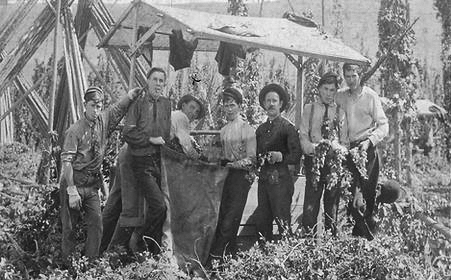 Hop Pickers in Original Hop Field_S "Original hop yard located in the field behind where Troops Scoops, Bouckville is today. Ernest Dahn identified as third from left. | 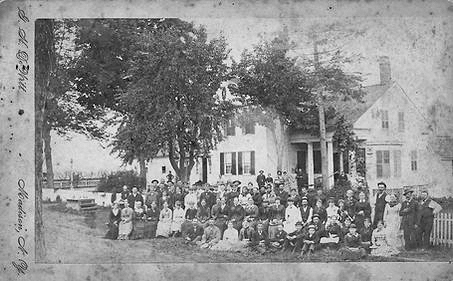 Hop Pickers Bouckville Original Site Bouckville Original Site: "Hop pickers circa late 1800s at the original home of James D. Coolidge, Route 12B south of Route 20, Bouckville.
|
A hop kiln [see photograph below] on Scenic Route 20, going west in Bouckville (a dirt road back then). The pointed top let the smoke out from the fire that burned in a stove on the main floor. The top floor consisted of slats with hops laid over them to dry before baling and taking to market.
Read more of the hops story, and see the historic marker awarded to the Town of Madison Historical Society by the William G. Pomeroy Foundation. https://www.wgpfoundation.org/historic-markers/first-hop-yard/
Location of Historical Marker.
Current Google Maps street level view of the original James Coolidge house.
Article provided in the "History of Madison" web page of the Town of Madison, New York.
"The Cobblestone Houses of Upstate New York", compiled by Dorothy Wells Pease. Research done in collaboration with Hazel B. Jeffery, supplemented with material furnished by Carl F. Schmidt, 1941. Reference the fourth paragraph on page 42.
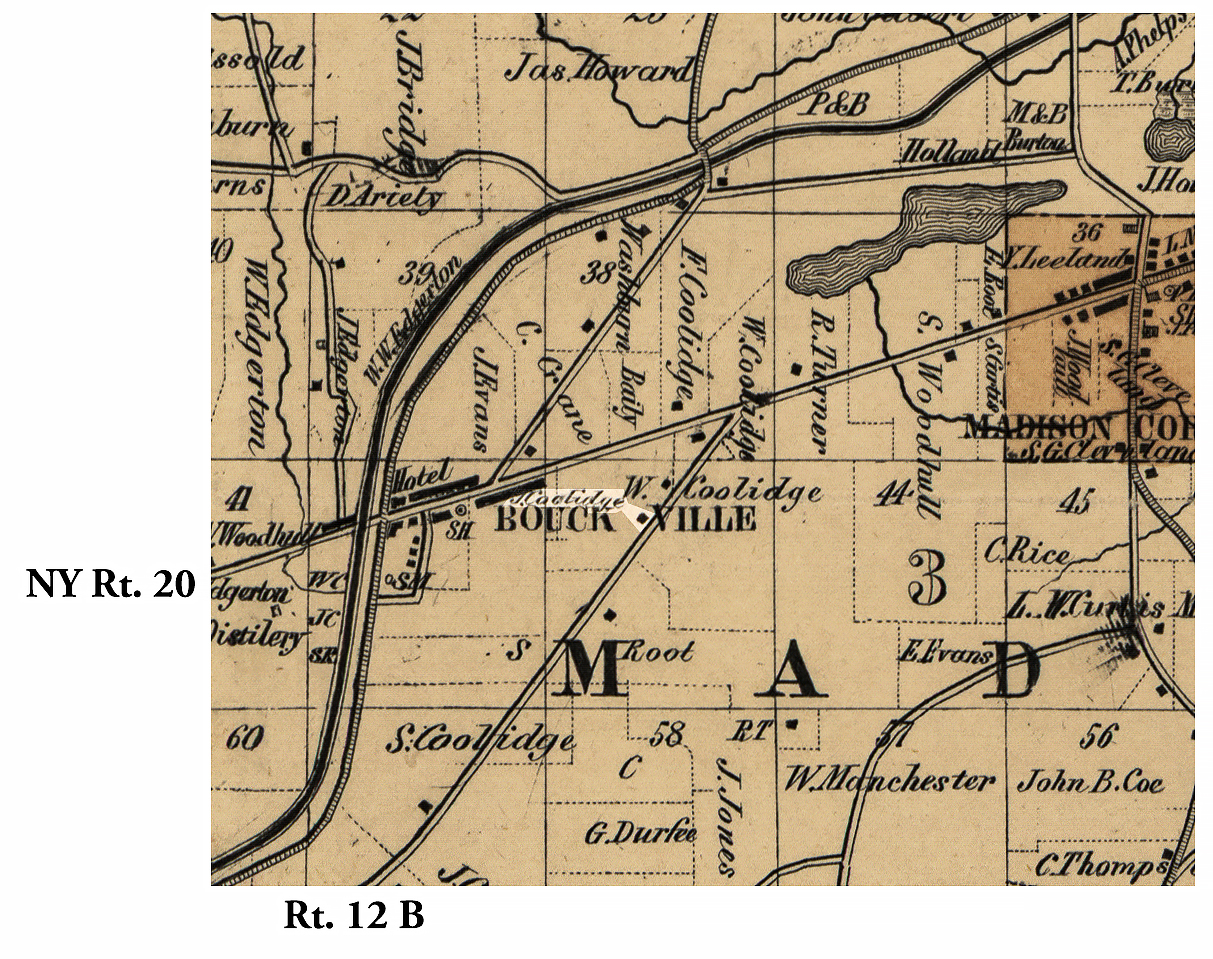 1853 Map of Madison County Mad-11 Excerpt.jpg ¹ | 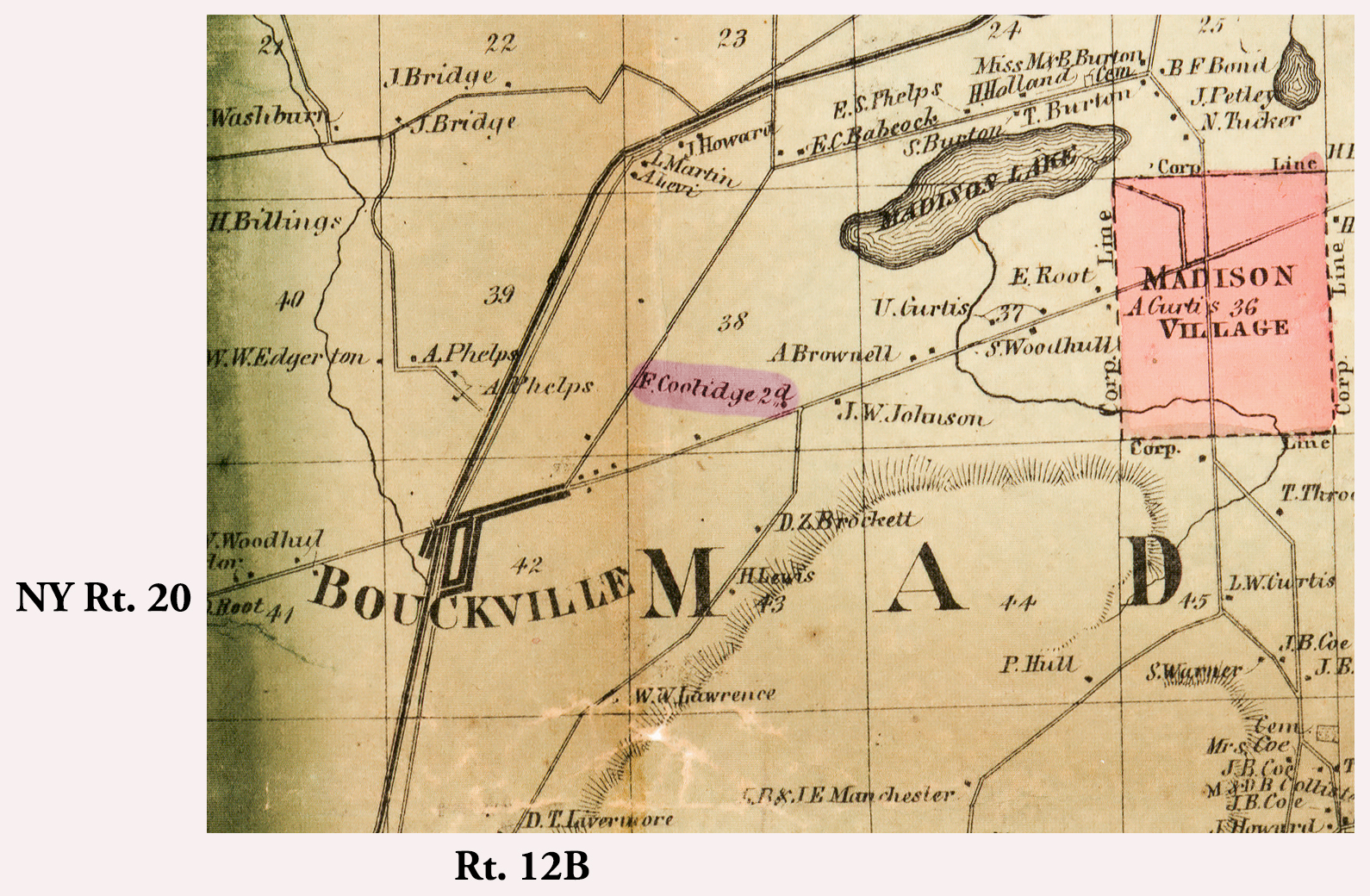 1859 Madison County Coolidge Hop Kiln Map Excerpt.jpg ² | 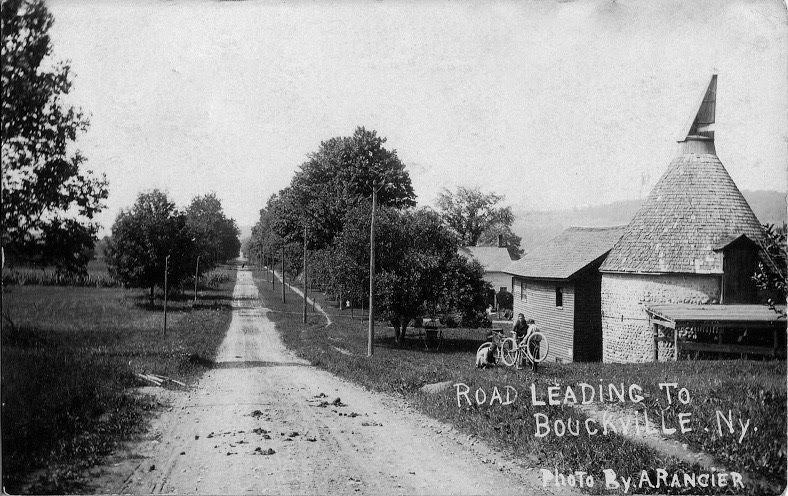 Hop kiln, Route 20, Fred Dahn farm, just east of Bouckville, 1912.jpg ³ Cobblestone hop kiln on Route 20 between Madison and Bouckville on the Fred Dahn farm, 1912, looking west. Now gone. |
Editor's Note: Both the 1853 and 1859 map excerpts are included. The 1853 map shows the location of the James Coolidge house. There are differences between the two maps which have not been researched. Neither the exact nor the approximate location of the Hop House has been determined. 3/2/2022.
¹ 1859 Madison County Map Excerpt courtesy Library of Congress.
² 1859 Madison County Map Excerpt courtesy Library of Congress.
³ Image courtesy Diane Van Slyke, Madison County Historical Society, Town of Madison Historian.
